Dialing format
International dialing code converter
Get a default international dialing format from packaged metadata when available, using one destination and an explicit calling-from region.
- One destination and explicit origin
- Typed unavailable outcomes
- No carrier or PBX promise
Try it now
Find a default international dialing format
Provide a global destination and the two-letter region you are calling from.
Enter destination and origin to begin.
Quick answer
A bounded dialing-format lookup
This tool asks packaged metadata for a default format; it does not construct access prefixes itself.
Destination
One global number.
Origin
One explicit two-letter region.
Unavailable
Reasons remain visible.
Practical workflow
Find a default dialing format
Provide both inputs and review the available or unavailable result.
- 1
Enter destination
Use a global number.
- 2
Enter origin
Use a supported region.
- 3
Review
Confirm requirements with your carrier or device.
Dialing format limitations
A packaged default format does not promise carrier, device, mobile, PBX, or calling-plan acceptance.
What an available format tells you
Available means packaged metadata supplied a default representation for the destination and the selected calling-from region. The tool does not place a call, inspect a device, query a carrier, or check a subscription.
Use the result as a starting format, then follow the instructions of the calling service, PBX, or device that will actually handle the call. Those systems can add rules not represented in packaged metadata.
Keep origin and destination separate
The destination is the global phone number. The origin is the two-letter region from which a person or system would begin dialing. They answer different questions and should not be swapped.
Changing the origin can change the available default format even when the destination stays the same. Re-run the tool whenever the calling context changes.
Practice resource
Dialing context
Uses packaged libphonenumber-js@1.13.9/max metadata, not live carrier, assignment, or reachability data.
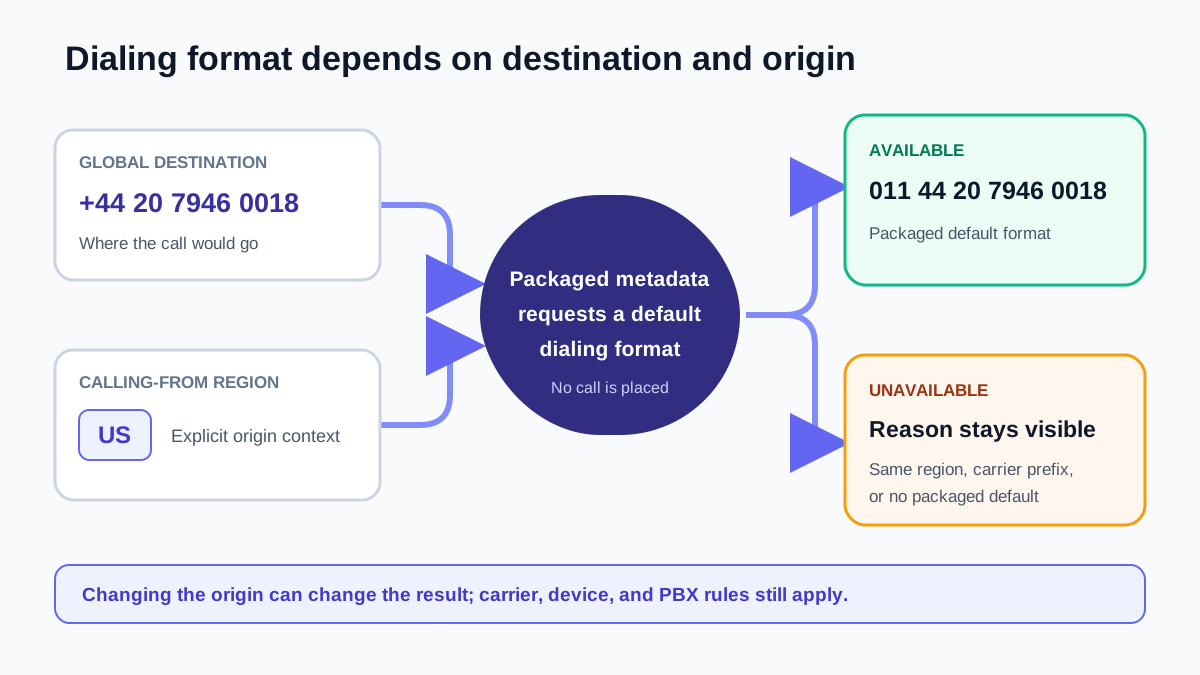
| Destination | Origin | Packaged result |
|---|---|---|
| +44 20 7946 0018 | US | 011 44 20 7946 0018 |
| +44 20 7946 0018 | GB | Unavailable: same region |
| +44 20 7946 0018 | BR | Unavailable: carrier prefix required |
Result states
A result is either available or typed unavailable.
| Input | Result | Meaning |
|---|---|---|
+44 20 7946 0018 from US | 011 44 20 7946 0018 | Packaged default result. |
+44 20 7946 0018 from GB | Unavailable: same-region-or-not-applicable | This tool formats international calls only. |
+44 20 7946 0018 from BR | Unavailable: requires-carrier-prefix | A carrier-selected prefix is required. |
Dialing format questions
Will this guarantee a call completes?
No. Carrier, device, PBX, and plan rules can differ.
Does unavailable mean the destination cannot be called?
No. It only means no default format is supplied for this input pair.
Why is an origin required?
Dialing conventions can depend on where the call begins.
Policies and references
Related phone converters and workflows
Continue with the next workflow or browse the full directory.